The last post of this three part series will cover your shoulder complex and upper body positioning. I will discuss the three common postural distortions observed in my clients, and recommend flexibility and strengthening exercises to combat these asymmetries, or muscle imbalances.
Arms Fall Forward
Overactive (tight) Muscles
- Latissimus Dorsi: O – T7-T12, Iliac Crest (pelvis), Thoracolumbar Fascia, Ribs 9-12; I – Scapula (lowest point), Intertubercular Groove of Humerus
- Pectoralis Major/Minor: O – Clavicle, Sternum, Ribs 1-7; I – Greater Tubercle (humerus), Coracoid Process (scapula)
- Teres Major: O – Scapula (inferior portion); I – Lesser Tubercle (humerus)
- Coracobrachialis: O – Coracoid Process (scapula); I – Humerus (medial portion)
Underactive (weak) Muscles
- Mid/Lower Trapezius: O – T1-T12; I – Spine and Acromion Process (scapulae)
- Rhomboids: O – C7-T5; I – Scapula (medial portion)
- Rotator Cuff Muscles – S.I.T.S. Muscles
Subscapularis: O – Scapula (anterior portion); I – Lesser Tubercle (humerus)
Suprapinatus: O – Scapula (upper, posterior portion); I – Greater Tubercle (humerus)
Infraspinatus: O – Scapula (lower, posterior portion); I – Greater Tubercle (humerus)
Teres Minor: O – Scapula (lower, lateral portion); I – Greater Tubercle (humerus)
- Posterior Deltoid: O – Scapular Spine; I – Deltoid Tuberosity (humerus)
“What muscles do I need to foam roll and stretch?”
Latissimus Dorsi

Image source: NASM

Image source: NASM
Thoracic Spine
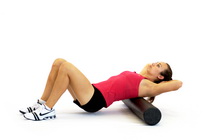
Image source: NASM
Chest

Image source: NASM
“What strengthening exercises do you recommend?”
Seated Cable Row
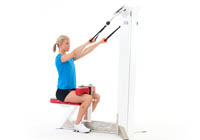
Image source: NASM
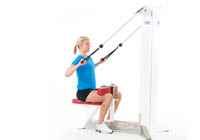
Image source: NASM
Squat to Row
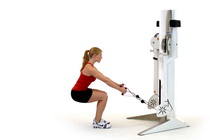
Image source: NASM

Image source: NASM
Ball Cobra
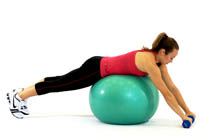
Image source: NASM

Image source: NASM
Standing Shoulder External Rotation
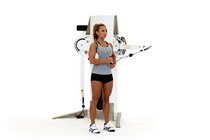
Image source: NASM

Image source: NASM
Standing Single-Leg PNF

Image source: NASM

Image source: NASM
Forward Head
Overactive (tight) Muscles
- Levator Scapulae: O – C1-C4; I – Scapula (upper, medial portion)
- Sternocleidomastoid: O – Sternum (top portion), Clavicle (medial 1/3 portion); I – Mastoid Process (lower, lateral portion of skull, near jawbone)
- Scalenes: O – C3-C7; I – Ribs 1 and 2
Underactive (weak) Muscles
- Deep Cervical Flexors
Longus Coli: O – T1-T3; I – C1
Longus Capitis: O – C3-C6; I – Occipital Bone (lower, rear portion of skull)
“What muscles do I need to stretch?”
Levator Scapulae

Image source: NASM
Sternocleidomastoid

Image source: NASM
Scalenes
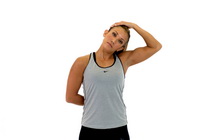
Image source: NASM
“What strengthening exercise do you recommend?”
Tuck Chin
Neutral Head Positioning During All Exercises and Activities of Daily Living
Shoulder Elevation
Overactive (tight) Muscles
- Upper Trapezius: O – Occipital Bone (skull), C7; I – Clavicle (lateral 1/2 portion), Acromion Process (scapula)
- Sternocleidomastoid: O – Sternum (top portion), Clavicle (medial 1/3 portion); I – Mastoid Process (lower, lateral portion of skull, near jawbone)
- Levator Scapulae: O – C1-C4; I – Scapula (upper, medial portion)
Underactive (weak) Muscles
- Middle/Lower Trapezius: O – T1-T12; I – Spine and Acromion Process (scapulae)
- Rhomboids: O – C7-T5; I – Scapula (medial portion)
- Rotator Cuff Muscles – S.I.T.S.
Subscapularis: O – Scapula (anterior portion); I – Lesser Tubercle (humerus)
Suprapinatus: O – Scapula (upper, posterior portion); I – Greater Tubercle (humerus)
Infraspinatus: O – Scapula (lower, posterior portion); I – Greater Tubercle (humerus)
Teres Minor: O – Scapula (lower, lateral portion); I – Greater Tubercle (humerus)
“What muscles do I need to stretch?”
Upper Trapezius
Image source: NASM
Levator Scapulae
Image source: NASM
Sternocleidomastoid
Image source: NASM
“What strengthening exercise do you recommend?”
Floor Cobra

Image source: NASM
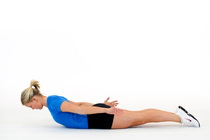
Image source: NASM
Ball Cobra

Image source: NASM

Image source: NASM
Do you want to learn more stretching and strengthening exercises to alleviate your aches and pains, increase your flexibility, and become a healthier, fitter you?
Fill out and submit the form below or stop by Crunch Fitness on Union Street today!
Your message has been sent


 Train for Life
One response to “Test Your Posture: Part 3”
[…] Test Your Posture: Part 3 […]
LikeLike