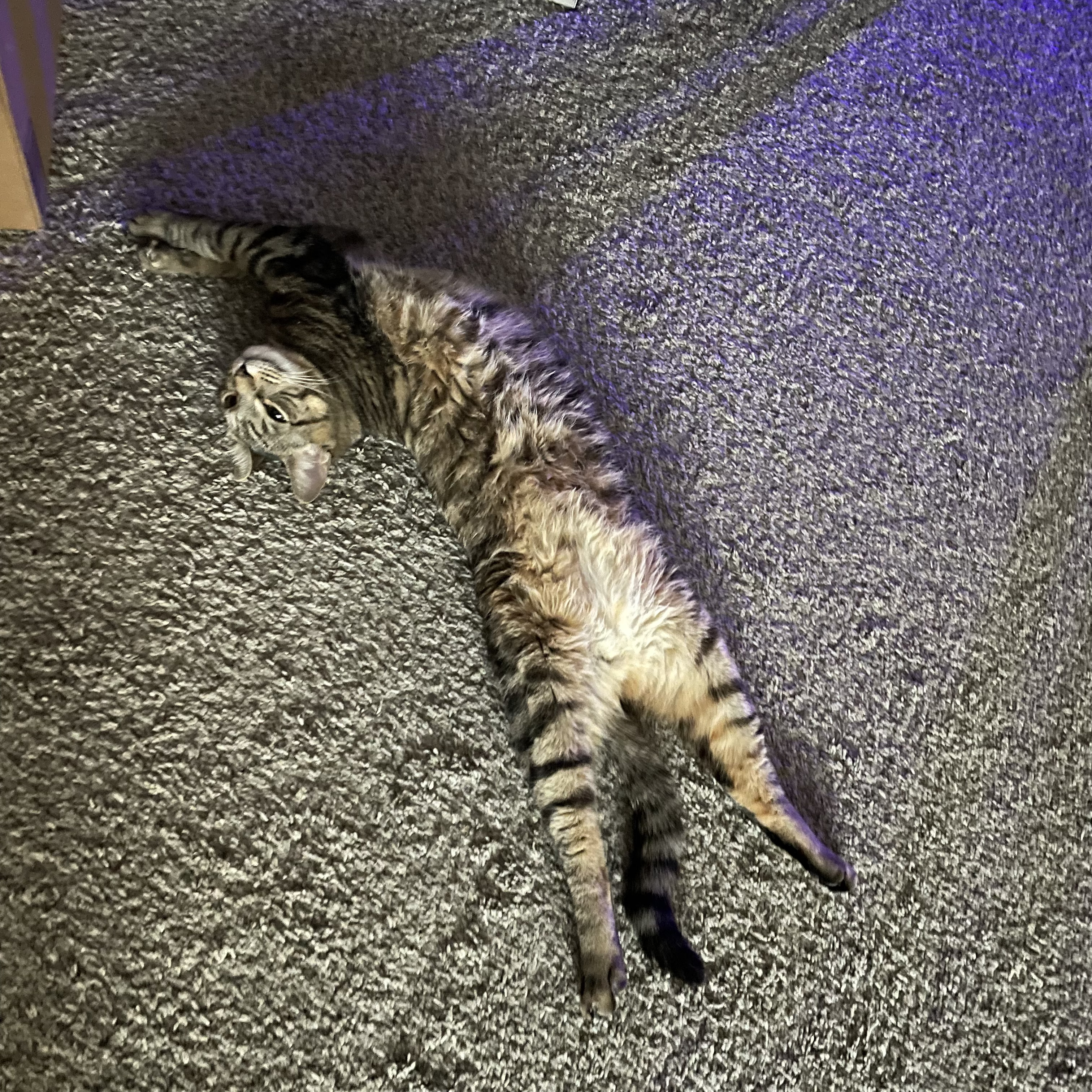
The Posture of a Cat 🐱
Examples that involve a cat’s whole body movements.
Unsure
Cats can express uncertainty in both a standing or a seated posture.
Visual Signs
Stops moving
Head is below shoulder height.
Slightly crouching; Limbs tucked in.
What Your Cat May Be Feeling
Unsure
Cautious
“Approach or retreat?”
“This is different.”
Scratching (on a surface)
Scratching is an essential need for cats. Even cats who have been declawed will attempt to scratch.
Visual Signs
Dragging claws on a horizontal or vertical surface.
Stretched out body
What Your Cat May Be Feeling or Doing
Happy; Excited
Seeking attention or care from their humans
Needing to ease tension
Nail care; Removing the dead outer sheath from their nails or sharpening their claws.
Getting a good body stretch
Putting down pheromones (scent marking)
Alert, Curious
Visual Signs
Head held high
Ears up; Eyes wide open
May place rear up on their hind legs.
Meerkat posture
What Your Cat May Be Feeling or Doing
Alert; Attentive
Slightly tense, but not enough to run away and hide.
“I need more information.”
“I need a better look.”
Fixated, Stalking
Visual Signs
Body is low to the ground; Neck stretches forward
Focused stare; Pupils may change size.
Waits and watches or creeps forward slowly
What Your Cat May Be Feeling or Doing
Very focused
Calculating distances
“I’m gonna get you!”
“The catch is near!”
Anxious
Visual Signs
Crouching close to the ground; Keeps their distance
Tail is low or tucked down
What Your Cat May Be Feeling
Scared
Unsafe
Predicting danger or discomfort
Prepared to flee
“Ready to escape!”
Very Scared
The more frightened a cat is feeling, the smaller or flatter a cat makes him/herself.
Visual Signs
Crouching; Tucked-in head and limbs
All four (4) paws are flat on the ground
Pupils are dilated
What Your Cat May Be Feeling or Doing
Terrified
Unsafe
“Don’t look at me.”
“Leave me alone!”
“Everything is terrible!”
Defensive
Often misinterpreted as the cat is being “mean.”
Visual Signs
Body is crouched with weight shifted away.
Paw is raised (ready to swipe).
Ears are flattened.
May hiss, growl, or spit.
What Your Cat May Be Feeling
Trapped, with no escape.
Extremely scared
Needing the threat to go away
“I have no other choice!”
Tall, Terrified
Usually know as the Halloween Cat Pose (tail up or down), this posture is often misinterpreted as “evil” or “mean.”
Visual Signs
Standing tall and stiff with arched back
Head is low or tucked.
Showing side of the body
Tail is puffed up (low or high).
May hiss, grow, or spit
What Your Cat May Be Feeling or Doing
Startled or scared with nowhere to hide
Trapped
“Get out of here!”
Prepared to fight back
Looking as big as possible as a warning
“Stay back!”
Tall, Threatening
This posture is usually directed at another cat and can be in a standing or seated position.
Visual Signs
Standing tail and stiff
Head is held high above shoulder height.
Prolonged intense staring
May hiss or growl
What Your Cat May Be Feeling or Doing
Angry or Annoyed
Needing to remove the other cat from this area
“This is mine. Get out of here!”
Prepared to attack
Depending on the other cat’s response, this cat may fight or retreat.
Know the Difference!
Arched Back Posture
Similar posture, but different movements!
Removing a Threat
When feeling unsafe, cats arch their back high-up as a defensive gesture. Their head position is low and movements are tense.
“I Feel Good”
If the whole body is loose and relaxed, an arched back could be part of a big slow stretch or a friendly greeting.
Initiating Play
If a cat is making sideways bouncy movements, it could be an invitation to play.
*
If you or your friends or family live in Renton, Washington (or surrounding area) and are looking for a compassionate cat sitter to care for your feline friends this summer, book me on Meowtel.

Reference
Chin, L. (2023). Kitty language: An illustrated guide to understanding your cat. Penguin Random House, LLC: New York. P. 81-95.

 Train for Life