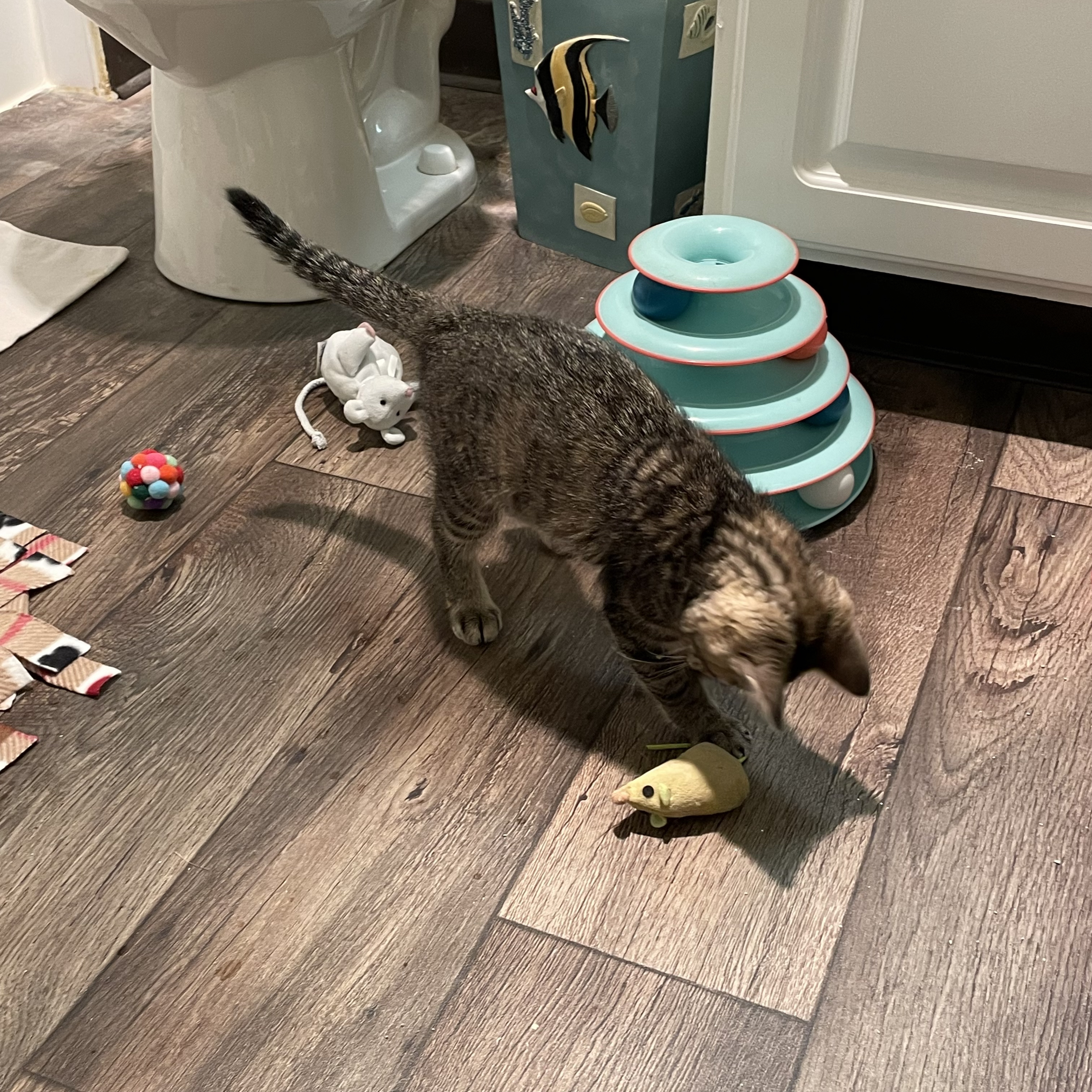
Play 😼Behaviors of a Cat 🐱
In the cat world, there are two main ways to play: play-hunting (with small objects and prey) and social play (with cat friends).
Play-Hunting
Also known as predatory play, prey play, and object play.
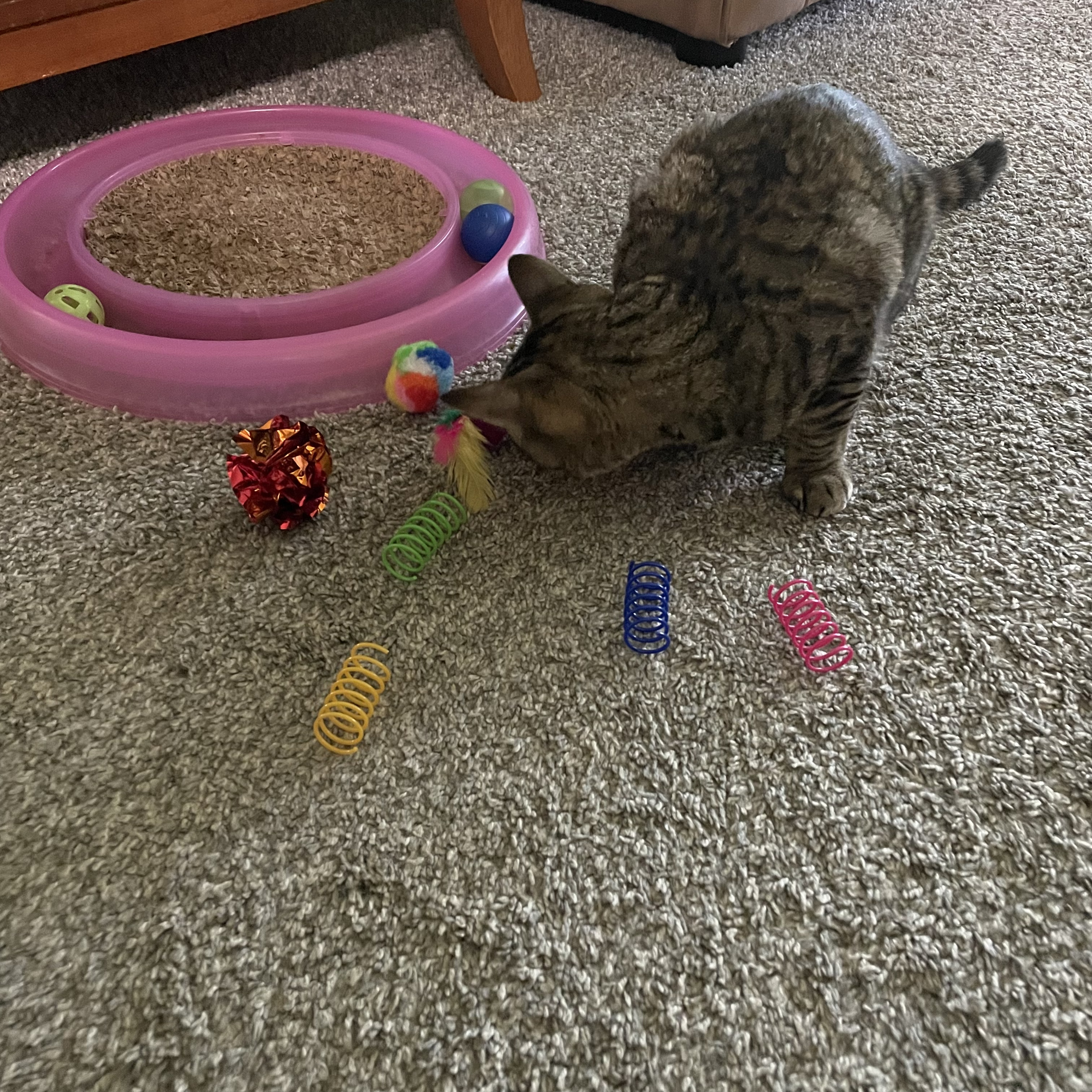
Hunting behaviors are essential to a cat’s health and a key part of being a cat. Cats are solitary hunters, so play-hunting is a solo activity practiced with small objects such as, toys made to move like prey by a human hand. Play-hunting is lots of fun for a cat and also a great way for you to bond with your cat and learn what they like. When cats play-hunt, they use their claws and teeth to interact with the prey.
Tooth and Claw
Scooping and tossing
Swatting, grabbing, and holding
Raking (bunny-kicking) with their back paws
Biting to kill
Stalk and Ambush
Intense focus on object that moves like prey.
Preparing to pounce
As a cat matures, the cat may spend less time doing “tooth and claw” and enjoy more “stalk and ambush” activity.
Social Play
Cat play is easily misinterpreted as fighting. When two cats are playing, it is non-serious “ritualized conflict.” Their rough and tumble play body language can look like aggression, but it’s more like a sporting event.
Visual Signs
Stare-offs
Rotating ears
Arched backs and puffed-up fur
Big tail movements
How Do We Know This is Fun Play?
Mostly silent (no hissing, growling, or squealing)
Swatting or smacking with claws in; No pain or injury.
Cats swap top and bottom positions.
Lots of short pauses; “Play Pauses”
Easy for either cat to leave, but they choose to return or stick around.
In the context of play, these behaviors are all non-threatening signs and both cats stick around for the action until one cat leaves. Claws and teeth are kept in check and not used to hurt or kill. Typically, both cats have friendly relationship and allogroom.
Play Pauses
Cats are easily distracted, and frequent pauses during play tell you that neither cat is feeling seriously threatened by his/her partner.
Visual Signs
Briefly looks are something else.
Briefly licks or scratches self
Brief head turn or nods
Short pauses, soft blinky eyes
What Your Cat May Be Feeling or Doing
“How can I better position myself to win this match?”
“Hmm… What’s over there?”
“One sec…”
Distracted by something else
Needing a short break
Reassessing; Considering the next move.
How Do We Know When It’s Not Fun Play?
Sometimes friendly play can get too intense and turn into conflict. It is also no longer mutually fun if one cat is in play-hunting mode and the other cat is being hunted.
Pay attention to the body language and movements of each individual cat to know if this is mutually fun play, fun for only one cat, or an actual fight.
How Do We Know It’s a Fight or Not Mutually Fun?
Visual and Auditory Signs
Hissing, growling, or shrieking sounds
Intense interaction with no pauses (prolonged stare-off, stress signals).
Pain or injury from biting and swatting
One cat is pursuing, while the other cat tries to escape or leaves and does not return.
In a true fight between two cats, nobody is able to easily leave.
“This is not fun.”
“Ouch!!! I can’t get away!”
Learn the Difference of a Swat!
A cuff, swat, or paw slap is often misinterpreted as an “aggressive” or “jerk” move because sometimes the cat’s claws are involved. In order to know what is really happening, pay close attention to what occurs before and after the action.
Play-Hunting Activated!
If swatting something makes it move so you want to swat it again… the cat is having fun.
Stop Doing That!
If smaller communication signals have had no effect, cats may use their paw to prevent further torment. “That’s enough, thank you.”
Extra Benefits
If a cat is feeling curious about an object, the cat may investigate with his/her paw. Oftentimes, there are big rewards such as, receiving extra attention from the cat’s human!
*
If you or your friends or family live in Renton, Washington (or surrounding area) and are looking for a compassionate cat sitter to care for your feline friends this summer, book me on Meowtel.

Reference
Chin, L. (2023). Kitty language: An illustrated guide to understanding your cat. Penguin Random House, LLC: New York. P. 137-151.

 Train for Life